

Stop hating on processed foods
Psst... Today's newsletter is a freebie!

Hi there! Today’s newsletter is a freebie, but most are available in their entirety only for paid subscribers. So if you can afford to do so, please consider upgrading your subscription.
If you aren’t able to commit to an upgrade but want to show a little support, I absolutely love coffee as well.
Lastly, if you have been enjoying my newsletter so far, you will probably love my book. It’s called Live Nourished: Make Peace with Food, Banish Body Shame, and Reclaim Joy, and is available wherever books are sold.
On to today’s newsletter…

Can people get a break? I mean, seriously. At what point are we going to stop viewing everything with a binary lens? At what point are we going to realize that not everything is black and white, especially when it comes to nutrition and our food choices?
I find the discussion of processed foods tiring because I find that it lacks nuance and is too often viewed through an elitist lens. I talk about all foods having a place (except the ones you’re allergic to and the ones that are unseasoned) because I believe in that statement. However, when I say this, it doesn’t translate to me not caring about health, nor does it translate to me advocating for a diet sustained on chips and soda. Again, nuance and, dare I say, a little critical thinking. I discuss processed foods quite often and will continue to advocate for them, yes, even as a dietitian, because guess why? There is a place for it. Actually, there are several places for it.
Society, unfortunately, lumps all processed and ultra-processed foods together as one. Not to mention that there is so much misinformation regarding anything sold in a package. There is still the belief, for instance, that if you can’t pronounce it, you shouldn’t eat it. I mean, our own Health and Human Services Secretary (HHS) once read a list of ingredients and, because he didn’t know what riboflavin and carrageenan were and didn’t know how to pronounce them, decided that they were bad and declared that these ingredients shouldn’t be in our food.
I want to emphasize here that neither is bad, but especially riboflavin, which is a B vitamin that our body needs. And what’s so great about many packaged foods is that they are fortified and enriched with vitamins and minerals that we wouldn’t normally get a ton of. This is a good thing. I would expect a HHS Secretary to know this, but I digress.
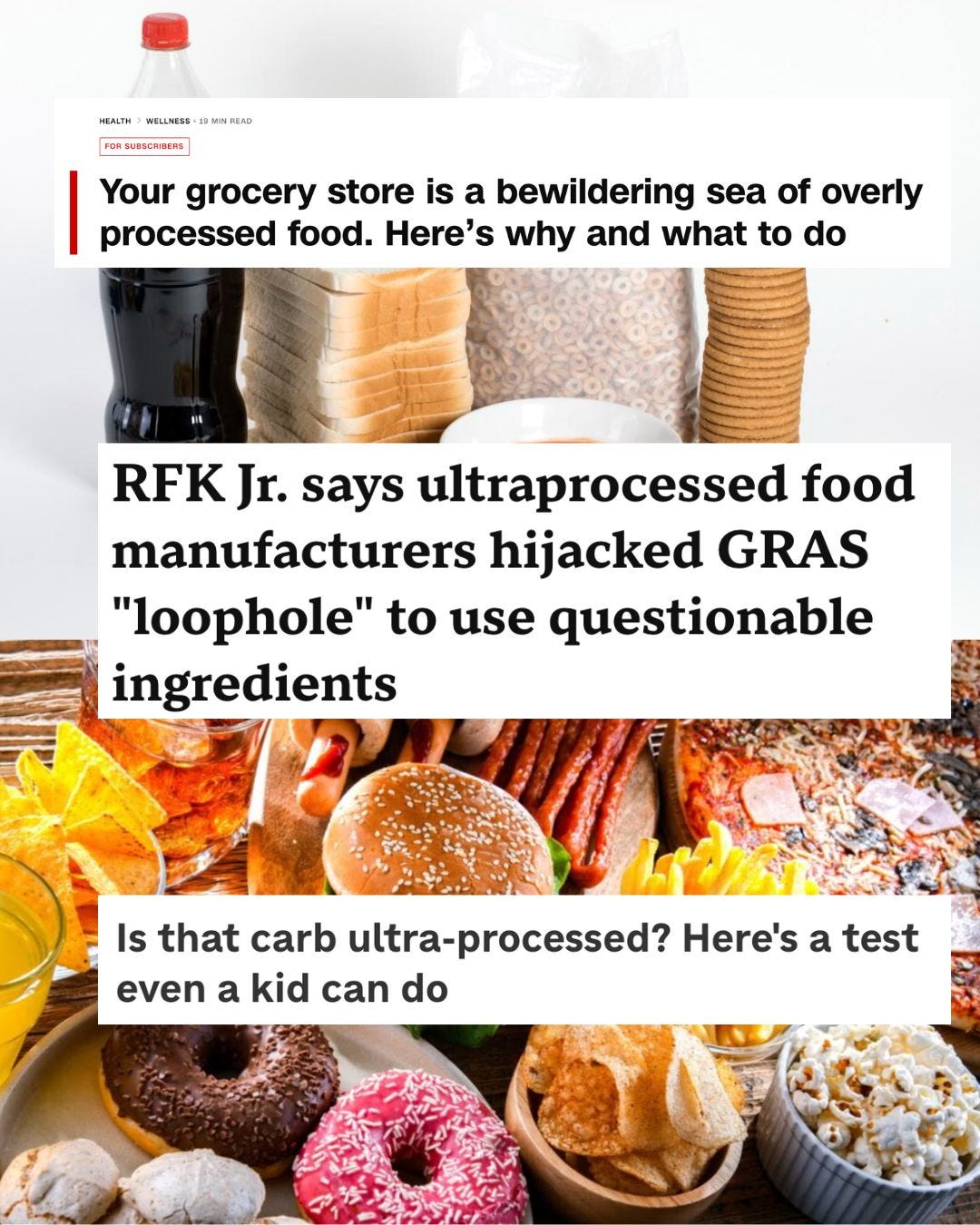
“This is a list of ingredients from foods — carrageenan, riboflavin, monosodium glutamate and 20 others that I can’t pronounce.” - Robert F. Kennedy Jr.
What is a processed food anyway?
Concern with the nutritional quality of food is definitely increasing, especially with the media oversimplifying topics and studies. In my opinion, foods that are classified as processed and, most importantly, ultra-processed foods (UPF) are one of the most fear-mongered topics. Processed and packaged foods are often vilified because we’re told to eat food closest to its natural state. But what lots of people don’t really realize is that the vast majority of what we eat is processed in some way. Even foods that have been frozen, placed in containers, dried, cooked, vacuum-packed, washed, or had unwanted or inedible parts removed could be considered minimally processed.
We can define ultra-processed foods, according to the NOVA food classification system, as formulations of ingredients, mostly of exclusive industrial use, typically created by a series of industrial techniques and processes such as fractioning (which separates the food into discrete parts, like sugars, oils and fats, fiber, and protein) and chemical modifications like hydrogenation, as well as the addition of additives. This is all a very fancy way of saying that these are modified foods with the help of adding various oils, fats, sugar, starch, and proteins. And yes, it sounds scary to call food “laboratory-made” because of flavor enhancers, colors, and food additives. However, we have to remember nuance when discussing nutrition.
Potato chips are ultra-processed because they are completely different products from the vegetable potato from which they originated. But guess what? Plant-based imitation meats are also considered ultra-processed foods because they are vastly different from the original form of their ingredients, which can include green peas, lentils, and brown rice. These ingredients are nutrient-dense, but these plant-based foods are still ultra-processed food in the end. Especially with additional ingredients, such as oils, which are often included to help alter not only the taste but also the texture of products.
As for the chemicals added in processing, because I know that’s a big concern for people, many think that preservatives or ingredients you can’t pronounce are inherently scary or that anything added to food is harmful. However, many of our foods are processed to add nutrition, not reduce it. For example, milk is often fortified with vitamin D, and breakfast cereals can have added B vitamins, vitamin A, vitamin D, zinc, iron, and more. Wheat flour is enriched with folic acid, riboflavin, and iron. Not to mention that certain processes like pasteurization decrease microbial contamination and reduce foodborne illness.
In other words, processed or even ultra-processed doesn’t have to cause mass panic. And the extent to which food is packaged or processed doesn’t necessarily negate the nutrients that it has to offer or the amount of joy it can bring. After all, food is more than its nutritional makeup.
Tips of the trade
As I mentioned in the beginning, there is a place for processed foods. Not to mention, with the ever-increasing grocery store prices, there is a need for budget-friendly ideas.
Well, what I can offer is a list of suggestions for different foods and how to incorporate them into a budget-friendly meal plan. Not to mention that keeping certain foods on hand for time-saving meals is not a bad idea, and this is where I think the “justice for processed foods” will come in. Remember — not all processed foods are created equally.
So here are some of my favorite tips of the trade…
Just a quick reminder that supporting my work would mean a ton to me. If you don’t want to commit to a subscription, I love coffee, and I also have a book out now with a chapter on this topic!
Canned foods
Cost-effective and shelf-stable. I always suggest that people stock up on these regardless, because you can never go wrong. I always have multiple cans of beans in my pantry because, for starters, beans are good for you. High in fiber and high in protein, it’s sort of like a two-for-one deal. Not to mention that canned beans take out the step of soaking dry beans overnight since they are ready to go. They can easily be added to dishes such as salads, potatoes, rice, soups, and the list goes on. I personally love black beans, and I will add them to potatoes and quesadillas. What about the sodium, you ask? Great question, which can be answered by rinsing off the beans. Get a strainer, dump the beans from the can into the strainer, and rinse them off in the sink. That’s it.
Tuna is another canned food that I always have on hand. And no, we really do not consume enough fish as humans for there to be a serious mercury concern. I have a few cans in my pantry, and they are a quick addition to salads and sandwiches, or you can top them on crackers for a snack. They are a protein (about 20 or more grams per can), so they will also sustain you. I personally purchase the variety that is in water and with no salt added. That way, I can add my own olive oil and no-salt lemon pepper seasoning to taste. You, of course, can do what works for you. Again, we are going for cost-effectiveness and shelf stability here.
Frozen foods
Frozen foods are another great way to stock up on nourishing additions to your meals. They do not get the same hate as canned or packaged foods, but many folks are still within the “fresh is best” mindset. I love having frozen vegetables and fruit in my freezer. There are so many different kinds to choose from, and the best part is that the produce is picked at peak ripeness, so the nutrients are a bit higher. This is the same with canned vegetables and fruits, believe it or not. I love to roast vegetables because that’s my personal preference; however, when I am in a bind and not in the mood to chop and wait for vegetables to roast, frozen vegetables are quick to steam. I also like adding my frozen vegetables to something like packaged ramen to increase the nutrients that I am getting.
Many varieties are cost-effective, and because they are frozen, they will last longer. I don’t know about you all, but my refrigerator tends to turn into a vegetable hospice because I forget about what is in there. Sometimes, I don’t even forget — I honestly just don’t have a big cooking week and overestimate the life expectancy of my produce. I am also very money-conscious to some degree, and the thought of having to toss non-edible food because I wasn’t paying attention is very annoying. Listen, I am human, and I am trying my best, and we listen and don’t judge.
Packaged foods
Dry pasta is such a quick and easy item to have on hand. The best part is that there are so many varieties now that are gluten-free, high-protein, made from different types of legumes, etc., that there is a choice for everyone out there. And guess what the magic words are that I am about to use? Yup, you guessed it! They are cost-effective and shelf-stable. I mean, it’s pasta, so there are so many different ways and varieties to make it. It is very easy to add different types of protein: beans, chicken, tofu, and anything else of your choosing. Not to mention, very easy to add vegetables to the dish, especially if you want to use up what’s in the hospice vegetable drawer in the fridge before going bad.
Packaged and store-bought tortilla wraps are another food that I usually have on hand. I personally choose the whole wheat version because that way I get in more fiber, but choose the one that you prefer. I love making “quesadillas” by adding in beans or leftover rotisserie chicken and cheese. When I am feeling super fancy and have onions or spinach on hand, I cut that up and add it in as well. It’s fast to make and is sort of like a fancy grilled cheese sandwich. I keep the tortillas in the fridge for them to last longer.
Honorable mentions
Russet potatoes are another food that I often have on hand. I did a study abroad program in London my senior year of undergrad, and I swear that is when I began my love of putting beans in my baked potatoes. The potatoes themselves are usually cost-friendly, and even though they are fresh produce, they last a decent amount of time. I “bake” them by putting them in the microwave for a few minutes until they are cooked, and then stuffing them with beans (from a can) and topping them with cheese and broccoli if I have it on hand. It’s very delicious and very filling.
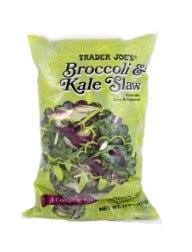
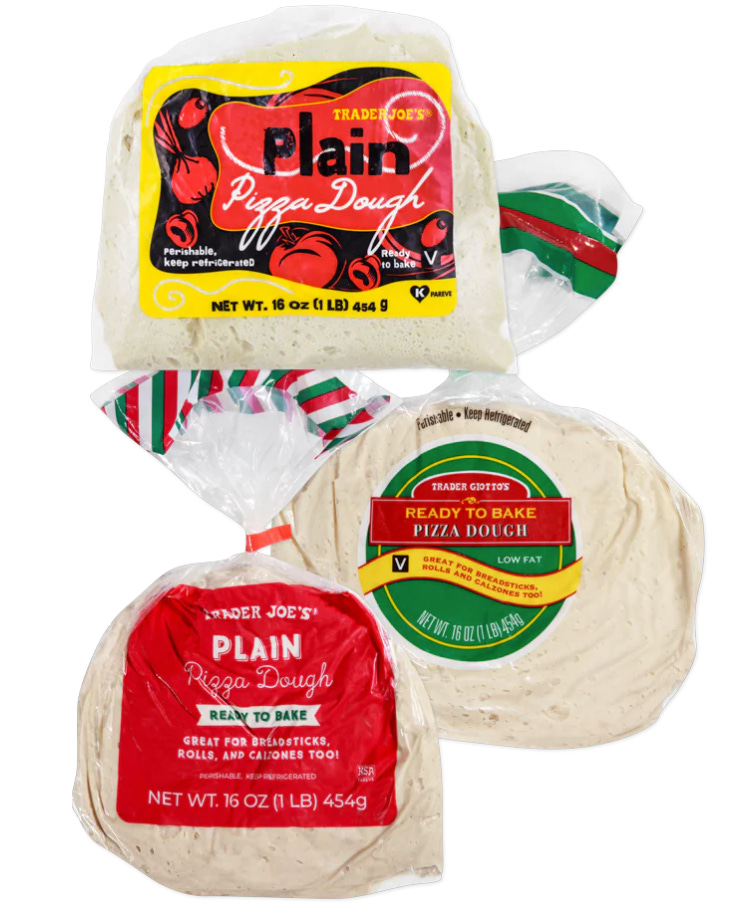
I have a Trader Joe’s near me at work, which is very good and also very “bad” because, of course, I want to try everything and anything that I see on the shelves, and those pennies add up. But there are some staples that I pick up when I am there. One is the Broccoli and Kale Slaw Salad. I have a couple of these in the fridge, which is very helpful for times when I don’t even have the mental capacity to think about food. Another is their pizza dough. Now, this takes work because you have to roll it out in order to get that “pizza” shape, but once this happens, it’s very easy to add sauce and other toppings. Plus, it only takes about 8-9 minutes to bake. Overall, it is quick and not too expensive. Now, these have to go in the fridge and do have an expiration date, but both make meals that are easy on the wallet.
Overall, I think it is always best that we stop viewing everything through a binary lens. This is one of the reasons why there is such a general fear surrounding processed foods. At what point are we going to realize that not everything is black and white, especially when it comes to nutrition and our food choices? I’m hoping that it is soon because with our current events, many people are going to be turning to packaged, canned, frozen, and other foods that are not as commercially accepted. And yes, there are many other foods that I haven’t mentioned that maybe you enjoy, which is great.
Fed is best will always be the goal, and that is going to look different for everyone.
I have my students learn logical fallacies because it helps them debunk misinformation. The appeal to nature fallacy is one of the most popular because it’s freaking everywhere. I also have to explain to them that claiming that something is all natural and charging more for it is not, legally, false advertising because advertising laws are whack.
Fantastic article! I love the way you look at this topic through a different lens … it made a paradigm shift for me. Thank you!